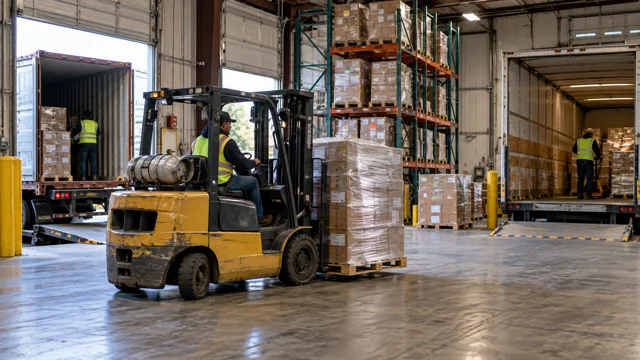

Inventory moves for fulfilment and online retail
E-commerce freight connects manufacturers, suppliers, fulfilment centres and returns locations. Bulk freight transport is different from individual parcel delivery to consumers. Define the receiving facility and shipment type first so the quote covers the actual movement and any required handoff into a fulfilment network.
Freight profile and shipment information
Prepare pallet and carton counts, dimensions, weights, product descriptions and order or inbound shipment references. Identify mixed-SKU pallets, stackability and labelling requirements. If the shipment is a return, describe its condition and whether quantities are confirmed. State whether sorting, relabelling or pallet rebuilding is needed.
What to prepare before booking
Send the fulfilment centre’s current receiving instructions, booking reference and appointment process. Confirm who generates labels and who schedules delivery. Identify limited-access facilities, floor-loaded containers and any pallet or packaging restrictions. Changes made in an inventory system should also be communicated to the transport coordinator if they affect the shipment.
How VEXO coordinates the movement
VEXO coordinates the accepted cargo profile with the provider and receiving window. For recurring replenishment, establish expected volumes and a way to flag peak-period surges. Where transloading or storage is needed, identify the facility and its receiving and release responsibilities. Do not assume freight delivery includes inventory reconciliation inside a customer’s platform.
Shipper, carrier and receiver responsibilities
The shipper ensures physical cartons and labels match the booking. The carrier retains the transport references and reports an appointment or access problem. The receiving party records accepted units and exceptions. The fulfilment system’s later inventory count may require a separate investigation supported by the pickup and delivery records.
When plans change or issues arise
An incorrect label, cancelled appointment or noncompliant pallet can lead to rejection and extra handling. Obtain the rejection reason before arranging a revised move. Storage, relabelling and redelivery require agreed scope and charges. Preserve shipment IDs, appointment evidence and condition records when investigating a receiving discrepancy.
Build a repeatable shipping programme
For ongoing work, share your primary lanes, expected weekly volume, peak periods and the requirements that vary by location. Identify an operations contact and an alternative decision-maker for time-sensitive changes. A useful programme records equipment expectations, receiving windows, documentation and escalation arrangements for each lane.
Before each tender, confirm the current cargo, timing and site instructions. A previous successful delivery does not mean that a changed product, facility or handling requirement has already been accepted. Review new requirements with the coordinator before the freight is released.
Agree how performance will be discussed: pickup and delivery outcomes, avoidable waiting, recurring paperwork issues and supported billing discrepancies are practical starting points. Any reporting format or review schedule should be agreed for your account rather than assumed from a website description.
Delivery records and follow-through
Retain the accepted quote, shipment instructions, transport document and delivery receipt. Record visible shortages or damage accurately, preserve photographs and packaging where relevant, and report the issue promptly with the shipment reference. A receipt notation is useful evidence but does not replace presenting a claim through the applicable process.
Waiting, additional handling, changed destinations and redelivery should be supported by the relevant dates, times, receipts and instructions. Send these with the shipment reference so the parties can reconcile the charge against the accepted scope. Questions about product quality or suitability should go to the responsible product specialist.
Start the conversation
Use the quote form for your route, cargo and timing requirements, or speak with a specialist about a recurring programme. Include the industry-specific details above so the team can assess equipment and provider fit. Services, special handling and timing commitments are confirmed for the actual shipment before booking.
Request an industry quote ↗ Speak with a specialist